![(ex-genius:firthofforth:dontcookbilly:emcum:obscurityvstheinternet:War Changes a Man)
Michael Jackson: [reading out loud] One of the main reasons for seeing ghosts is because you are not keeping yourself busy enough. Your imagination is allowed to run wild. Oscar The Grouch: Uh, hey fella! What’s that book you’re reading there? Huh? Michael Jackson: “Everything You Wanted To Know About Ghosts But Were Afraid To Ask”. It’s really trash. Oscar The Grouch: Oh, well, I happen to like trash. I’ll tell you what. I’ll give you this brand new broken portable TV for it, huh? What do you say? Michael Jackson: Nevermind. You can have it for gratis. Oscar The Grouch: Yeah, but can I have it for free, too? Michael Jackson: That too. Merry Christmas! Oscar The Grouch: Well, I won’t go that far, but thanks, pal! Michael Jackson: See you later! Bye!](https://lh3.googleusercontent.com/blogger_img_proxy/AEn0k_vc2CktA6SWCeyRnUUqFVOnCh5bS7EYHy07mUcc_DDoaeJR15a20j4D9F3sgz8lDcPunbiwfg8EYqehcjypahnDGQYI3pGxEjSkRvb7s3ZyB9vMNB4FcErtCKIle477hbI=s0-d) War, it changes people. When one thinks of war, images of battle, blood, and death appear as the main focus in one’s mind, but the aspect of what war does to a person psychologically is sheltered by these outer pigments. Although war is based on these gory images of conflict, The Wars, by Timothy Findley shows the aspect that the chaos of war really affects the mentality of a soldier’s state of mind. War has a definite effect on the mentality of a soldier, much so that many soldiers result in insanity during, or after leave of combat. Post Traumatic Stress Disorder is the term where after a traumatic event, such as war, soldiers are still thriving a battle inside of them which leads to insanity of the mind. Insanity by definition is the mental illness or derangement of one’s mind caused from an incident of stress and anxiety. Timothy Findley does not only portray the physical aspects of war on a soldier, but as well the mental aspects in the novel. Findley, through the use of the character Robert Ross, portrays the effects on the mind from the chaos of war, from which Robert has a change in mindset from his time of enrollment to his act of leave and comes back a different man. Throughout the book Robert is faced with many difficult times, which in the essence, changes him from who he once was to a soldier filled with insanity. The implements of war have changed Roberts’s state of mind and are focused on primarily throughout the novel. Timothy Findley portrays the effects on the mentality of a soldier’s state of mind to the point of insanity through the chaos of war in his bestselling novel, The Wars. Findley conveys this theme through the use of character development, foreshadowing, and imagery which will be focused on in this next segment of blogs through quotes and analysis of Robert and his employment in the war.
War, it changes people. When one thinks of war, images of battle, blood, and death appear as the main focus in one’s mind, but the aspect of what war does to a person psychologically is sheltered by these outer pigments. Although war is based on these gory images of conflict, The Wars, by Timothy Findley shows the aspect that the chaos of war really affects the mentality of a soldier’s state of mind. War has a definite effect on the mentality of a soldier, much so that many soldiers result in insanity during, or after leave of combat. Post Traumatic Stress Disorder is the term where after a traumatic event, such as war, soldiers are still thriving a battle inside of them which leads to insanity of the mind. Insanity by definition is the mental illness or derangement of one’s mind caused from an incident of stress and anxiety. Timothy Findley does not only portray the physical aspects of war on a soldier, but as well the mental aspects in the novel. Findley, through the use of the character Robert Ross, portrays the effects on the mind from the chaos of war, from which Robert has a change in mindset from his time of enrollment to his act of leave and comes back a different man. Throughout the book Robert is faced with many difficult times, which in the essence, changes him from who he once was to a soldier filled with insanity. The implements of war have changed Roberts’s state of mind and are focused on primarily throughout the novel. Timothy Findley portrays the effects on the mentality of a soldier’s state of mind to the point of insanity through the chaos of war in his bestselling novel, The Wars. Findley conveys this theme through the use of character development, foreshadowing, and imagery which will be focused on in this next segment of blogs through quotes and analysis of Robert and his employment in the war.Friday, 6 January 2012
Insanity Strikes
War, it changes people. When one thinks of war, images of battle, blood, and death appear as the main focus in one’s mind, but the aspect of what war does to a person psychologically is sheltered by these outer pigments. Although war is based on these gory images of conflict, The Wars, by Timothy Findley shows the aspect that the chaos of war really affects the mentality of a soldier’s state of mind. War has a definite effect on the mentality of a soldier, much so that many soldiers result in insanity during, or after leave of combat. Post Traumatic Stress Disorder is the term where after a traumatic event, such as war, soldiers are still thriving a battle inside of them which leads to insanity of the mind. Insanity by definition is the mental illness or derangement of one’s mind caused from an incident of stress and anxiety. Timothy Findley does not only portray the physical aspects of war on a soldier, but as well the mental aspects in the novel. Findley, through the use of the character Robert Ross, portrays the effects on the mind from the chaos of war, from which Robert has a change in mindset from his time of enrollment to his act of leave and comes back a different man. Throughout the book Robert is faced with many difficult times, which in the essence, changes him from who he once was to a soldier filled with insanity. The implements of war have changed Roberts’s state of mind and are focused on primarily throughout the novel. Timothy Findley portrays the effects on the mentality of a soldier’s state of mind to the point of insanity through the chaos of war in his bestselling novel, The Wars. Findley conveys this theme through the use of character development, foreshadowing, and imagery which will be focused on in this next segment of blogs through quotes and analysis of Robert and his employment in the war.
Controversy
In Part 5 of The Wars, there is controversy over the topic of the freeing of the horses in Chapter 8, and if Robert freed these horses out of good morals for the love of animals or from pure insanity of disobeying his Captains orders. This is a long argued discussion topic throughout this book that leads to Robert’s death because of this poor decision.
In one hand, many readers believe that Robert saved the horses out of good morals and his overall love of animals. Reading the novel, the reader gets to know Robert Ross and sees his character develop throughout the many events that take place. Robert grows up with good morals and always had a love of all things living. It is argued that Robert freed the horses out of good will and love for these defenseless animals. Many people agree with this statement, as do I, but the overall thought of did the war end up making Robert go mad, which would thrive him to do this action?
 On the other hand, seeing Robert’s character develop before, during and after the war shows the reasoning to why people believe that Robert went insane and led him to this disobedience of his Captain. Before the war, Robert wouldn’t have killed anything living. Compare this to during the war and to what took place in Part 5, shows that the war changed Robert mentally to the point of insanity. Robert would have never killed an animal, and now after Robert has been through the war, he ended up killing over 150 horses and his Captain. He disobeyed his Captains orders and ended up killing him because of this. The fact that Robert has changed because of the war, shows that he went mad from the war, and leads to the overall argument that Robert went insane and led to his death.
Many readers believe that Robert killed the animals out of an act of mercy because they were suffering, but to say this was the reasoning for killing Captain Leather and Private Cassles, that excuse doesn’t seem to work. As much as the reader may like to think that Robert didn’t go mad, you have to realize that Robert wouldn’t have done these actions if it wasn’t for the war changing him mentally. Although this argument may be discussed throughout generations if Robert actually went insane, the facts lead to one answer that Robert did in fact go mad because of the war, that later led to his death.
Inner/Outer Battles
Throughout the novel, Robert is faced with many difficulties that war brings upon him. Many of these battles are inner and outer battles that are waged throughout the book. Also known as mental and physical battles, these inner and outer battles that Robert is faced with take its toll on his body, and more importantly his mentality.
 Looking at the other aspect of war and how it affected Robert mentally, war changes people. For Robert, he had to deal with so much extreme tragedies throughout his time in the war. Dealing with death, harsh conditions, etc. all these factors add up over time and changed Robert mentally in the aspect of losing his sanity. In the quote above, it states that Robert’s mind had shrunk into a small protective shell for bare essentials. This is an excellent example of how Robert’s state of mind was at this time of war. It shows how over this war time period, Robert’s mind slowing was demolishing into nothing but the need for survival. Robert has dealt with so many inner battles throughout the war, it has taken effect and is finally seeping through to reality that war has indefinitely changed Robert’s mind set to the point of insanity, which led to his death in the overall outcome of the situation.
Dealing with outer battles first, Robert has endeavored many physical clashes throughout the novel. Whether it is sleep deprivation or lack of nourishment, these physical factors add up and take its toll on Robert.
“Robert had only taken eight hours’ sleep in the last three. He was living on chocolate bars and tea and generous portions of rum which he took from the supply wagons. His body was completely numb and his mind had shrunk to a small, protective shell in which he hoarded the barest essentials for reason.” (Findley 182)
Robert had only slept eight hours in the last three days and was surviving on alcohol. At this point of the war, times were very stressful with the German aerial attacks taking place. With Robert’s lack of sleep and food, his body was, in the essence, deteriorating. The fact that at this point of the war, Robert is being faced with these conditions is bad enough to think of, but to think that this is how many soldiers had to survive throughout the entire war is inhumane. Robert had to not only survive the German attacks, he had to survive and fight for the bare essentials to sustain life. These conditions that Robert is being faced with now are what he has been faced with throughout the entire war of about three years. These conditions definitely took its toll on Robert and it showed in this example by his whole outlook of the war and what it has done to him mentally.
 Looking at the other aspect of war and how it affected Robert mentally, war changes people. For Robert, he had to deal with so much extreme tragedies throughout his time in the war. Dealing with death, harsh conditions, etc. all these factors add up over time and changed Robert mentally in the aspect of losing his sanity. In the quote above, it states that Robert’s mind had shrunk into a small protective shell for bare essentials. This is an excellent example of how Robert’s state of mind was at this time of war. It shows how over this war time period, Robert’s mind slowing was demolishing into nothing but the need for survival. Robert has dealt with so many inner battles throughout the war, it has taken effect and is finally seeping through to reality that war has indefinitely changed Robert’s mind set to the point of insanity, which led to his death in the overall outcome of the situation.
 Wednesday, 4 January 2012
Part 5 Summary
Robert left St. Aubyn’s hospital, leaving Barbara behind to head back out to battle by train. A misunderstanding took place and Robert and his luggage were lost. Robert found himself ending up in Magdalene Wood in a mental institution until he got his pack back. Robert arrived at a bath house shortly after settling in, and got brutally raped by several other men in a dark cell while retrieving his clothes. At that time, Poole found Robert in the cell and returned his kit bag to him and broke the bad news that Bonnycastle has passed away. In the cell, Robert took his only picture of Rowena and burned it into ash as an act of charity, not anger.
Robert was then moved to the front lines, where he was in charge of the movement of convoys to the trenches. The Germans were attacking full strength now with plane bombers, creating casualties left, right, and centre. The Germans were hitting their mark, firing shells and setting everything ablaze. Robert had just received a fresh shipment of 30 horses and 30 mules and Robert went to speak with Captain Leather to request that the horses be let out of the stables for safety precautions. Leather refused Robert’s request, saying it would look cowardly, but that would not stop Robert from freeing the horses. Robert persuaded Devlin to help him with the horses, and got him to run and open the gates, going against his Captains orders. At that moment, Leather got up from hiding and saw Devlin releasing the horses. Leather ran out screaming at Devlin to stop, calling him a traitor. Leather then pulled out his gun and shot Devlin dead. Leather then went after Robert, taking a few shots and missing. At the precise moment, three shells land on the barn and set it on fire, killing any horses still trapped inside. The whole yard started to set ablaze, killing everything in its path besides Robert and Leather. Robert saw Leather struggle to his feet and Robert walked over and shot him between the eyes.
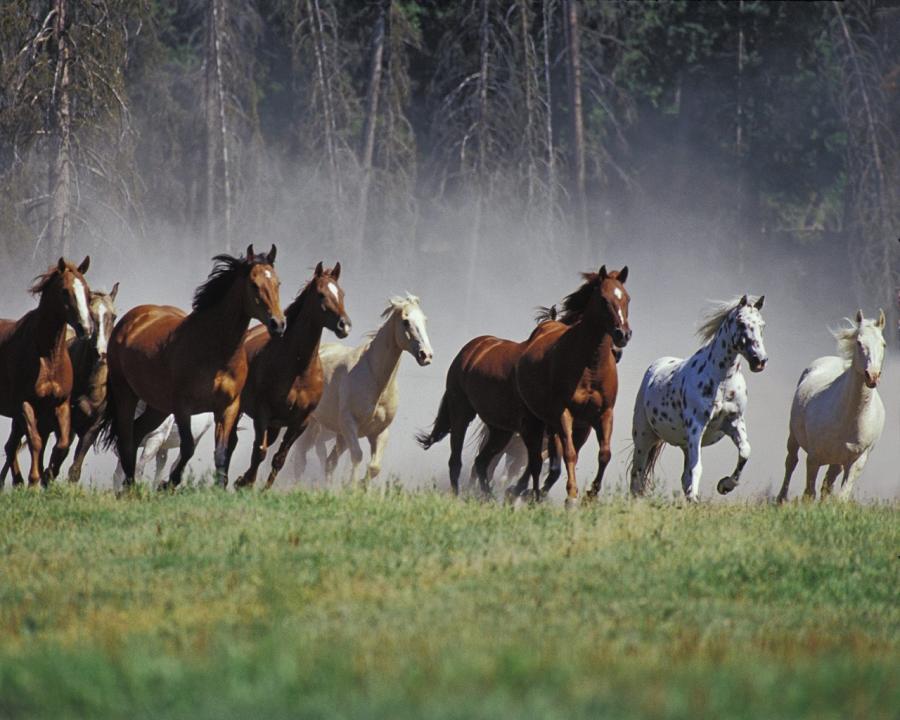 |
| Running of the horses |
Robert, looking at what had happened, knew he would be arrested for treason and started to run away with a horse and a black dog along an abandoned railway. Along the way, Robert spots a train with over one hundred and thirty horses inside, and sets them free. As Robert and the horses ran to freedom, it was said a man named Private Cassles tried to stop Robert. Robert then took out his Webley and shot him dead. Robert fled to an old barn where he stayed until Major Mickle and his forces found him. Mickle gave Robert an opportunity to surrender voluntarily, but Robert refused and shot in his direction. Mickle then advised his troops to set fire to the barn, and the roof collapsed on top of Robert and the horses. All of the horses and the dog died, while Robert was saved but badly burned.
 The novel ends with another transcript of Mariam Turner explaining Robert spending two months in Magdeline hospital under arrest until he was reinstated to St. Aubyn’s. Turner offered Robert a way out and to die, but Robert replied “Not Yet”. Robert spent the rest of his life in St. Aubyn’s hospital until he died in 1922. Only his father came to his funeral. He was almost 26 years old.
 Scarcity of War
“After that we sat a long, long while- Clive on the floor and me in the chair and Amanda on my lap. Then I said: why are Robert and Barbara so afraid? And Clive said: everyone they’ve loved has died. And I said: everybody dies. And Clive said: yes- but everybody isn’t killed. Then I said: that’s why Lady Sorrel lights her candles, isn’t it. So the Earl of Bath won’t perish. And Clive said: Yes. He said that in a way being loved is like being told you never have to die. And I said: Yes- but it doesn’t save you, does it. And he said: No- but it saves your sanity. Then I said: Are you afraid? And he said: Yes. And then I didn’t cry any more. Because he smiled.” (Findley 161)

This dialogue of Juliet and Clive was acquired from Juliet d’Orseys diary many years back. Clive is about to depart to war with Robert and this conversation took place before hand. Juliet was wondering why Robert was so afraid, and the answer to that is that everyone around Robert has either died or something about them has died. Juliet, since she is just a little girl, didn’t fully understand this interpretation of death, and didn’t get the meaning of why he is so afraid. Scarcity in the war is a normal emotion. The thought of death is always on a soldiers mind in the battlefield, never knowing which day will be your last. Robert has endeavored a great amount of death so far in the war with many of his war colleagues to family members passing away before his eyes. This takes a definite toll on soldiers, watching your friends die in front of you like that. This is why insanity strikes in many soldiers throughout the war. Many soldiers feel afraid about death and the constant fear that these soldiers live with really affects the mentality of these soldiers to the point of insanity in most cases.
Many people do not understand the psychological aspect of war and what war does to a soldier because to know what soldiers have to deal with, you would have to be put in that same condition. Soldiers have to put up with many devastating events throughout their term, and no wonder these men go insane. Just imagine the state of mind a soldier must have to survive in the war, first of all a soldier has to deal with death surrounding one another, and lack of sleep, lack of nourishment, etc. All of these factors and more, day after day, and I’m not just talking about a small period of time. These soldiers had to put up these conditions for years on end. Scarcity of death is just one attribute that affects a soldiers mind, so no wonder many of these men lose their sanity because of war.
Part 4 Summary
The majority of this section is told through the perspective of Juliet d’Orsey as a child through a transcript recovered from the time Robert was invited to stay at Barbara d’Orseys hospital. Much of the transcript is spread through her diaries of the time Robert rested in her home. The beginning of this section converses on Juliet’s home life and her family working at the St. Aubyn’s hospital where Taffler and Robert have been invited to. After Robert’s knees were fully recuperated, Juliet brought Robert to see Taffler. Juliet didn’t manage to tell Robert ahead of time that Taffler lost both arms in war, and Robert was devastated.
 |
| Diary of Juliet d'Orsey |
The majority of this section is told through the perspective of Juliet d’Orsey as a child through a transcript recovered from the time Robert was invited to stay at Barbara d’Orseys hospital. Much of the transcript is spread through her diaries of the time Robert rested in her home. The beginning of this section converses on Juliet’s home life and her family working at the St. Aubyn’s hospital where Taffler and Robert have been invited to. After Robert’s knees were fully recuperated, Juliet brought Robert to see Taffler. Juliet didn’t manage to tell Robert ahead of time that Taffler lost both arms in war, and Robert was devastated.
Juliet was known for snooping around the hospital, which led to her getting inn mischievous trouble that she did not want to encounter. Juliet picked flowers for Taffler one day and brought them to him. She walked in on him attempting suicide. Taffler was rubbing his raw limbs on the walls so that he could bleed to death. Because of Juliet, she saved his life when she screamed and the nurses took notice. Also one night, Juliet walked into Robert’s room, where she found Robert and Barbara making love, which she first thought they were hurting each other. These are just a few examples of Juliet snooping and seeing things she shouldn’t have seen at such a young age.
Roberts’s legs never healed properly and had to have surgery on his knees, which gave him an extra 2 weeks leave from war. Throughout this time, Juliet and Robert made quite a good friendship, sharing stories of home and what not. Prior to Robert leaving for war, Juliet gave Robert a candle and matches’, symbolizing the ghost stories of the room Robert was staying in at the hospital. Robert held onto this candle for the rest of his time in war and comes up later in the novel as a symbolic meaning.
Part 3 Summary
The layout of Part 3 of the novel is quite unique. Instead of breaking this part of the book up into chapters, Findley used a time segment to separate events in this part to show chaotic events that took place to Robert at this time. Most of Part 3 is focused on February 28th, one of the most hectic days of trench warfare Robert had encountered at the time. Robert has started to encounter the brink of warfare in the trenches following mines blowing up beside him one after another. This was enough to make Robert’s colleague Levitt go mad, with Robert on the brink of insanity. Robert was again in charge of another convoy heading to the main front lines for relief of other soldiers. He finds himself in the middle of a German gas attack with his convoy in the centre of a mortar hole. Robert was instructed to place guns in this crater for a strategic attack, but as war is portrayed, it didn’t go as planned. As the gas was protruding closer and closer, the minutes were getting eaten away as Robert’s convoy was struggling for their lives. After injuring himself, Robert climbed down the crater into the centre with his convoy following him. With an urgency to save them, Robert instructed the men to put on their gas masks. The rest of his crew were not issued masks when they were deployed and Robert had to take matters in his own hands and forcefully instruct the men, with his gun at hand, to urinate into clothes and hold them over their faces. After pretending to be dead for over three hours in the freezing temperatures of the winter, silence pierced each and every man in the convoy.
 “Still, they waited. The gas had begun to dissipate. More breeze had sprung up. More and more clouds were leaving the sky. It became very cold. But Robert and the men dared not move. At any moment the Germans would appear, for surely the gas had been the prelude to their attack. And if the Germans came, their only hope was to play dead and pray. The sun- at its zenith- died. The crows began to call to one another. It also began to snow.” (Findley 126)
Robert and the men realized that it was their time of dying if any such luck wouldn’t come to help them. The symbolism in this quote shows many different symbols of death and the mentality of the convoy at the time. The zenith of the sun had died which symbolizes the end of the life for the day. The animal symbolism portrays death as crows are considered the animal of death in literature and are assembling near the crater where the convoy is acting dead. It also began to snow in the end of the quote which shows meaning of winter, and in literature, winter means death again. So all the symbolism within this quote lead to death in one way or another, which is what the convoy thought was going to happen. It happened that as Robert was playing dead, he noticed that he was being watched by a German the entire time. Rather than shooting the soldiers, the German soldier allows the men to leave without harm. The German though, made a swift movement as Robert began his departure and Robert quickly turned and shot the soldier. It turns out that the German was just looking at a bird flying across the horizon, which led to his death. Beside the soldier was a fully loaded sniper, meaning that at any time the German could have easily killed each and every one of them, had he wanted to. Leaving the war scene, Robert was haunted with the sounds of a bird chirping, symbolizing more animal imagery. Robert later on found out that Rodwell was transferred up the line and had killed himself from his own insanity. Robert took the rest of Rodwell’s animals up to “Blighty” where he was transferred to and set them free.
Subscribe to:
Posts (Atom)